.png)
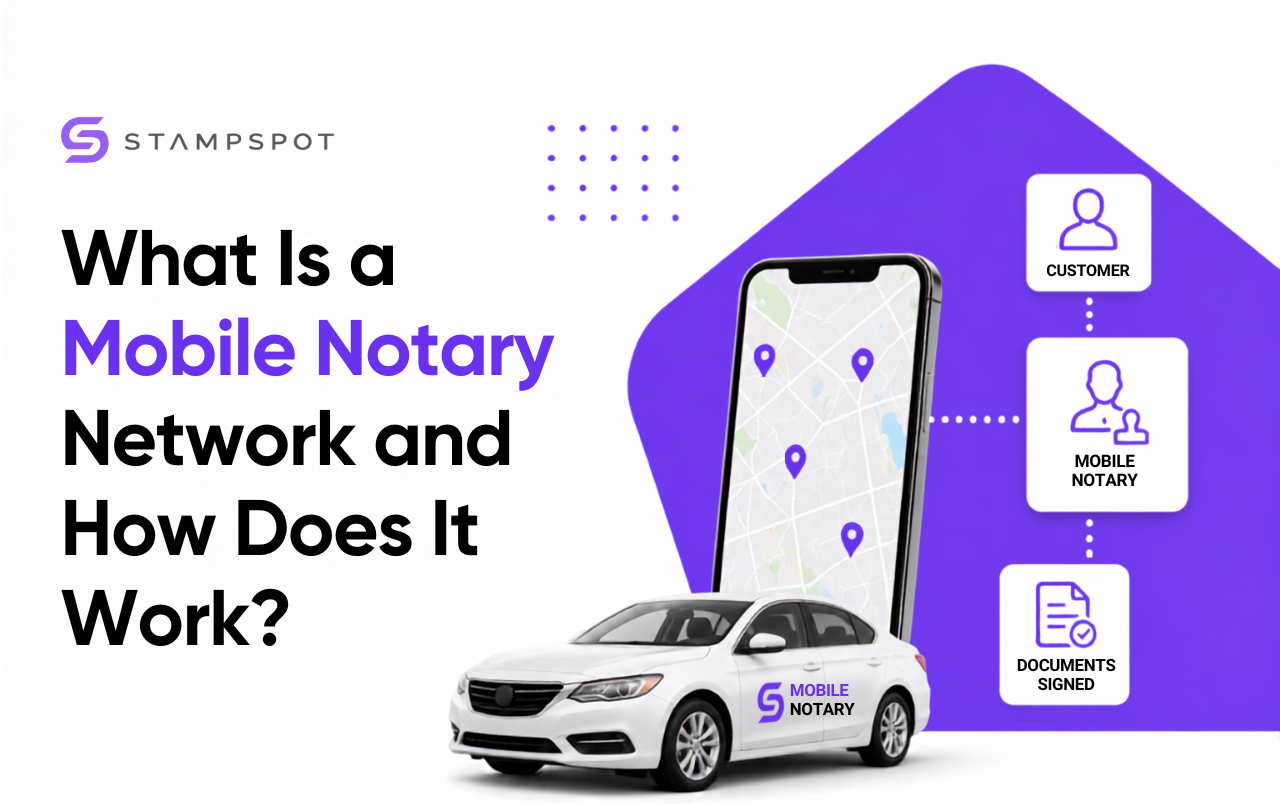
Search “mobile notary” in most cities and you won’t just find individual notaries you’ll find networks. A mobile notary network is a system that connects people who need a document notarized with traveling notaries across a wide coverage area, instead of relying on a single notary’s personal calendar and service radius.
The idea is simple: one notary can only cover so much ground. A network pools many notaries together so that no matter where a request comes from, there’s someone qualified, vetted, and nearby who can take it.
What Is a Mobile Notary Network?
A mobile notary network is a coordinated group of commissioned notaries, organized through a platform or service, who can be matched to signing requests based on location, availability, and document type. Some networks are run by a single signing service that assigns orders internally. Others operate as marketplaces, where the person requesting the notarization can see who’s available and choose directly. Either way, the core function is the same: turning “I need a notary somewhere in this zip code, today” into an actual confirmed appointment.
How a Mobile Notary Network Works
Most networks follow a similar request-to-completion flow:
- Request submitted: A client submits the document type, location, and preferred timing
- Matching: The network identifies notaries who are commissioned, available, and within range either automatically or by letting the client browse and choose
- Confirmation: The notary confirms the appointment, and the client receives details on timing and any documents to prepare
- Travel and signing: The notary travels to the agreed location, verifies identity, witnesses the signature, and applies the notarial seal
- Document return: Completed, notarized documents are delivered back to the client physically, by secure upload, or both, depending on the document type
The speed of that process depends heavily on how many steps require a third party to manually coordinate versus how much the client can see and act on directly.
How Notaries Get Vetted Before Joining a Network
Coverage only matters if the notaries behind it are qualified. Reputable networks typically require:
- An active state notary commission, verified directly against state records
- A background check covering criminal history, sex offender registries, and identity verification standard practice for anyone handling sensitive personal and financial documents
- Errors & omissions (E&O) insurance, commonly in the $25,000–$100,000 range, which protects clients if a notarial mistake causes financial harm
- A surety bond where the notary’s state requires one
- Additional certification for specialized work, like loan signing agent training for real estate closings
A network that skips this vetting is really just a directory. The vetting is what makes “network” mean something more than a list of names.
Traditional Network vs. Marketplace Model
Within mobile notary networks, there are two common structures. A traditional, assignment-based network takes your request and assigns a notary from its roster you don’t choose who shows up, and communication runs through the network rather than the notary directly. A marketplace-style network flips that: you see who’s available, review their experience, and select and message them yourself.
Both structures can include qualified, vetted notaries. The difference is mostly about control and speed assignment-based networks handle the matching for you, while marketplace networks put the choice (and the direct line of communication) in your hands.
Benefits of Using a Mobile Notary Network
Wider coverage. A single notary might cover one city; a network can cover every major market in the country, which matters for businesses operating across state lines.
Built-in redundancy. If one notary is unavailable, a network has others who can step in, instead of you starting your search over.
Consistent vetting standards. Working through a network means every notary you’re matched with has already cleared the same background check, insurance, and credentialing bar.
Scalability for businesses. Title companies, law firms, and signing-heavy operations can rely on a network to absorb volume increases without hiring or training additional in-house staff.
What to Look for in a Mobile Notary Network
Before relying on a network for anything time-sensitive, check that it offers:
- Verified credentials for every notary, not just self-reported claims
- Coverage that’s actually nationwide, not concentrated in a few metro areas
- Both mobile and RON-enabled notaries, so you’re not limited to one format
- Transparent fees with no hidden markup layered on top of the notary’s own rate
- A way to communicate directly with the assigned notary, especially for last-minute changes
How StampSpot’s Network Works
StampSpot operates as a direct-access marketplace rather than an assignment-based dispatch system. Clients can search by location, compare availability and experience, and message their chosen notary directly whether the signing is in-person or RON. Because there’s no internal assignment queue, confirming an appointment typically takes minutes rather than the hours a traditional network assignment process can take.
Frequently Asked Questions
Is a mobile notary network the same as a signing service?
Not necessarily. A signing service is one type of network typically assignment-based, with the service choosing your notary. A marketplace network lets you choose directly instead.
Can a mobile notary network handle both in-person and remote notarizations?
The better ones do. Look for a network that includes both mobile and RON-enabled notaries so you’re not stuck choosing a separate provider for each format.
Is it more expensive to use a network instead of finding a notary myself?
Not usually, and it’s often cheaper if the alternative is a signing service with a markup layer. Marketplace-style networks typically show you the notary’s actual rate with no added fee.
Final Thoughts
A mobile notary network is only as useful as its coverage, quality of options, and how much control it gives you over who actually shows up. The networks worth using are the ones that combine wide, verified coverage with direct access to the notary doing the work, instead of adding another layer between you and the signing.
CTA
Connect directly with a nationwide network of verified mobile and RON-enabled notaries on StampSpot.