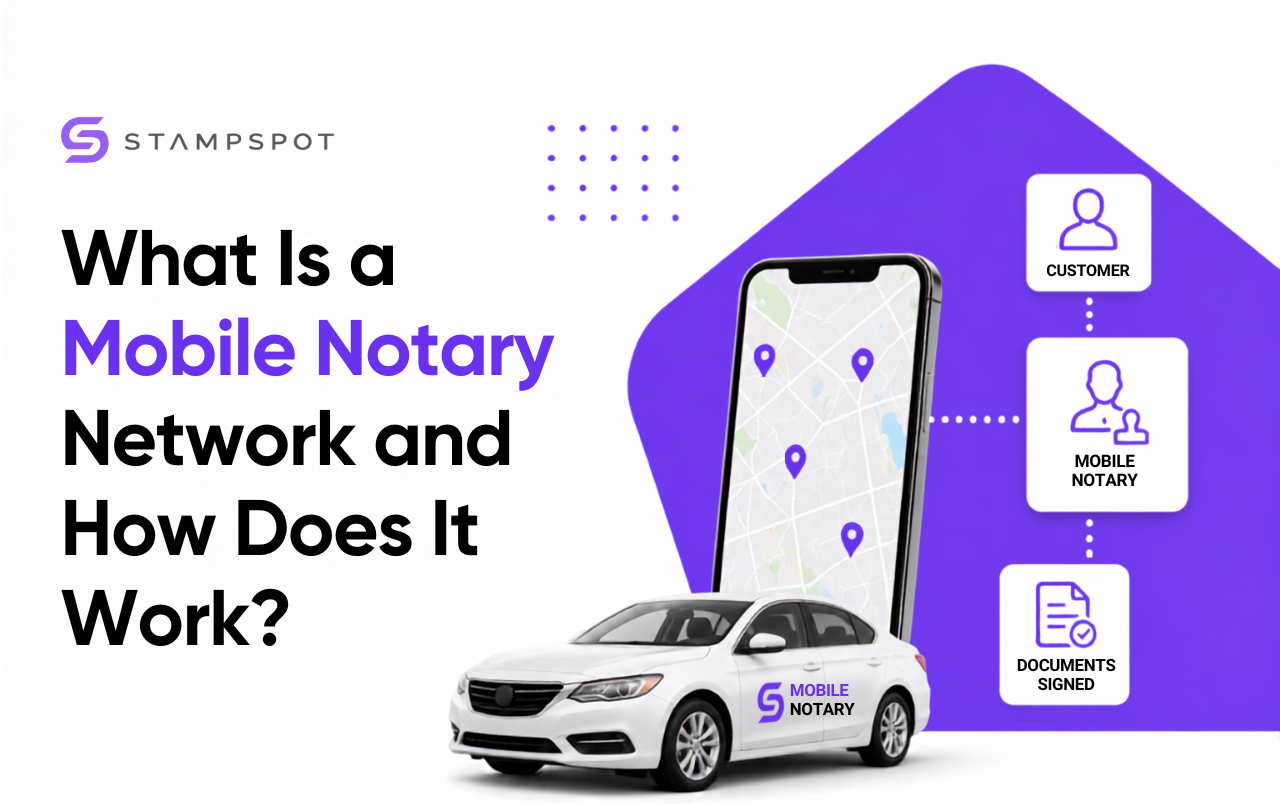
.png)
Needing a document notarized rarely happens on a convenient schedule. Closings, powers of attorney, affidavits, and loan packages tend to come with a deadline attached which is why so many people start searching for a mobile notary near me the moment they realize a trip to the bank or a UPS store won't cut it.
A mobile notary travels to your home, office, hospital room, or wherever the signing needs to happen instead of you traveling to them. The real challenge isn't whether mobile notaries exist in your state. It's finding one who's available, qualified for your document type, and not buried behind a signing service that adds days and extra fees to the process.
This guide breaks down what a mobile notary actually does, what it costs in 2026, how availability and rules shift from state to state, and the fastest way to connect with one directly.
What Is a Mobile Notary (and How Is It Different From an Online Notary)?
A mobile notary is a commissioned notary public who travels to a client's location to witness signatures and complete notarizations in person. They're most often used for:
- Real estate closings and loan signings
- Powers of attorney and healthcare directives
- Trusts and estate planning documents
- Business contracts and agreements
- Affidavits and personal legal documents
Mobile notaries are different from remote online notaries (RON), who notarize documents over live video instead of traveling anywhere. By 2026, nearly every state has authorized some form of remote online or remote e-notarization, with California the lone holdout still phasing in full permanent authorization. RON is often faster for documents that qualify, but several document types including certain wills, trusts, and real estate filings are still excluded from remote notarization in some states. When in doubt, a mobile notary remains the safer, universally accepted option.
Where People Usually Search and Why It Falls Short
Most people default to one of these:
- Typing "mobile notary near me" into Google and hoping for a quick answer
- Scrolling Google Maps listings with no real way to compare availability
- Calling a bank or UPS store, only to find they don't offer mobile service
- Going through a signing service, which acts as a middleman between you and the actual notary
None of these are necessarily bad but they're slow. Banks and retail locations rarely offer true mobile service. Signing services can take a cut and add a layer of back-and-forth before a notary is even assigned. And generic map listings don't tell you who's actually available tonight, this weekend, or within the hour.
Mobile Notary Rules and Availability by State
Notary law is state law, which means availability and requirements vary more than people expect:
- Fee caps differ widely. A notarization that costs a few dollars in New Jersey or Illinois can legally cost three to five times more in California.
- RON eligibility isn't universal. Most states now permit remote online notarization, but several still carve out exceptions for wills, trusts, certain real estate documents, or require the notary to be commissioned in-state.
- Out-of-state acceptance varies. Some states accept a notarization performed by an out-of-state RON notary; others require the notary to be physically located or commissioned within the state where the document will be used.
- In-person remains the universal fallback. Regardless of how your state treats remote notarization, a mobile notary appointment is accepted everywhere which is exactly why "any state" searches for mobile notaries stay so common even as online options expand.
If you're unsure whether your document qualifies for remote notarization in your state, a mobile, in-person notary sidesteps the question entirely.
What to Look for in a Mobile Notary
Before booking, check for:
- Active commission and ID verification for the state where the signing takes place
- Experience with your specific document type loan signings, real estate, and trust documents often require additional certification (Notary Signing Agent training)
- Errors & omissions (E&O) insurance, which protects you if a mistake occurs during the signing
- Realistic response time same-day or after-hours availability if you need it
- Reviews or a verifiable track record, especially for high-stakes documents like real estate closings
The Fastest Way to Find a Mobile Notary Today
Instead of calling around or waiting on a signing service to assign someone, a direct notary marketplace lets you skip the back-and-forth entirely. StampSpot connects clients directly with a nationwide network of verified, RON-enabled notaries, with no signing-service middleman, no waiting on a callback.
With StampSpot, you can:
- Search for available mobile and remote notaries by location in minutes
- Compare experience, specialty, and availability before booking
- Chat directly with your chosen notary and track your documents in one place
- Set the terms of the appointment yourself instead of going through a third party
Whether you need a mobile notary tonight, a RON-enabled notary for a same-day digital signing, or someone experienced with loan packages, StampSpot's direct-connect model is built to get a qualified notary in front of you faster.
Frequently Asked Questions
Is a mobile notary legal in every state? Yes. Mobile, in-person notarization is legal and recognized in all 50 states. What varies is pricing, travel-fee regulation, and how each state treats remote/online notarization as an alternative.
How much should I expect to pay for a mobile notary? Plan for roughly $70–$200 for a standard local appointment, with higher totals for after-hours, weekend, or long-distance requests.
Can I use a mobile notary for real estate closings? Yes, mobile notaries are commonly used for mortgage closings and other real estate transactions, especially when multiple signers need to be coordinated in person.
What's the difference between a mobile notary and a signing agent? A signing agent is a notary who has completed additional training specifically for loan and mortgage document packages. All signing agents are notaries, but not all notaries are certified signing agents.
Final Thoughts
Finding a mobile notary doesn't have to mean waiting on hold, paying hidden signing-service fees, or guessing whether someone's actually available tonight. Once you know what to look for proper commissioning, the right experience, and a fee structure with no surprises the fastest path is connecting directly with the notary doing the work.
CTA
Find a mobile notary instantly on StampSpot and connect directly with qualified, RON-enabled notaries nationwide with no signing service, no delays.